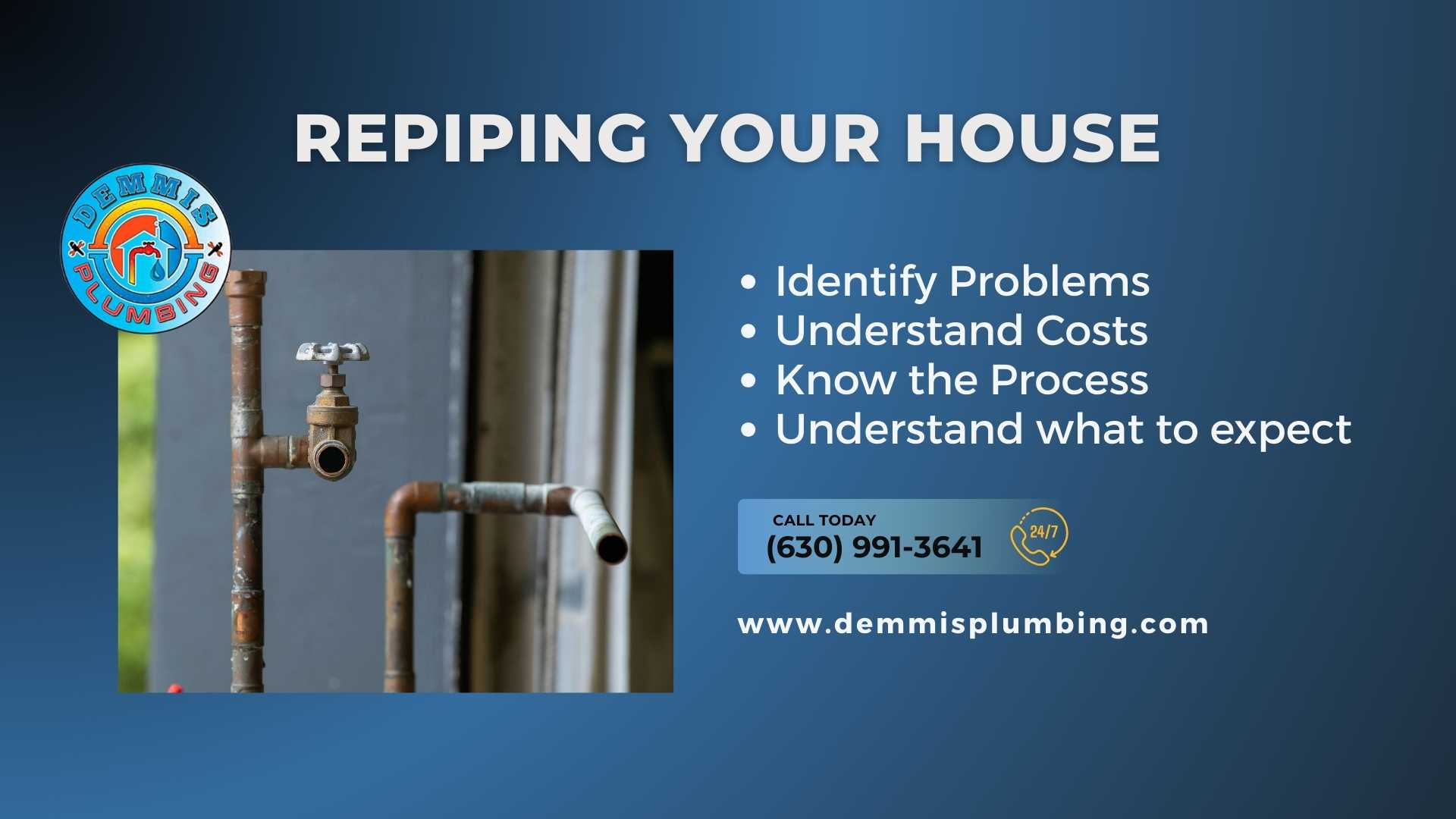
What Is Repiping a House?
Repiping is the process of:
-
Removing old water supply pipes
-
Installing new pipes throughout the home
-
Connecting fixtures to a new, clean water system
It can involve part of the house or the entire plumbing system.
Most homes need full repiping when pipes are no longer safe or reliable.
How Do I Know If My House Needs Repiping?
These are the most searched signs homeowners look for—and the most common ones we see on service calls.
1. Low or Uneven Water Pressure
If pressure drops when multiple fixtures run, pipes may be clogged or corroded inside.
This is common in older metal pipes.
2. Rusty or Discolored Water
Brown, yellow, or reddish water points to corrosion.
This usually means galvanized or iron pipes are breaking down.
3. Frequent Leaks
One leak can be fixed.
Repeated leaks signal pipe failure.
At that point, repairs cost more than replacement.
4. Old Pipe Materials
Homes built before the 1980s often have:
-
Galvanized steel
-
Cast iron
-
Polybutylene
These materials wear out and fail over time.
5. Water Has a Metallic Taste or Smell
This comes from pipe corrosion and affects water quality.
What Causes Pipes to Fail?
Homeowners often ask why pipes fail even without visible damage.
Common reasons include:
-
Age and wear
-
Mineral buildup
-
Internal corrosion
-
Poor water quality
-
Shifting foundations
Pipes deteriorate from the inside first. By the time leaks show, damage is already advanced.
What Pipes Are Used for Repiping?
Modern plumbing services use safer, longer-lasting materials.
Most Common Options
PEX piping
-
Flexible
-
Resistant to corrosion
-
Works well for most homes
Copper piping
-
Strong and durable
-
Long lifespan
-
Higher material cost
The right choice depends on your home, water quality, and layout. A licensed plumber helps you decide.
How Long Does Repiping Take?
One of the most searched questions is:
“How long will my water be shut off?”
Typical timelines:
-
Small homes: 1–2 days
-
Larger homes: 2–4 days
Water shutoff is planned and discussed in advance. Technicians work in stages to reduce downtime.
Does Repiping Damage Walls or Floors?
Some wall access is required.
Professional plumbers:
-
Cut only where needed
-
Avoid unnecessary openings
-
Plan pipe routes carefully
After repiping, walls can be patched by a contractor or homeowner. Many clients choose to combine repiping with remodeling projects.
How Much Does Repiping a House Cost?
Cost depends on several factors. This is one of the top Google searches related to repiping.
Pricing Is Based On:
-
Home size
-
Number of bathrooms
-
Pipe material
-
Accessibility
-
Local code requirements
A proper inspection is required for accurate pricing.
Avoid estimates without seeing the house. Cheap quotes often skip steps or use low-grade materials.
Is Repiping Worth It?
Homeowners often ask if repiping is worth the investment.
Benefits Include:
-
Steady water pressure
-
Clean, clear water
-
Fewer plumbing repairs
-
Lower risk of water damage
-
Increased home value
If you plan to stay in your home, repiping removes a major future risk.
Can I Stay in My Home During Repiping?
Yes, in most cases.
Plumbers work section by section. Some fixtures may be unavailable during work hours, but full relocation is rarely needed.
Clear communication helps avoid surprises.
Repiping vs Pipe Repair: Which Is Better?
Many homeowners try repeated pipe repairs first.
Here’s when repiping makes more sense:
-
Repairs keep happening
-
Pipes are past their service life
-
Water quality is affected
-
Leaks appear in different areas
Repairs fix symptoms. Repiping fixes the system.
Common Repiping Questions Homeowners Ask
Will repiping fix low water pressure?
Yes, if pressure loss is caused by pipe corrosion or buildup.
Will my water bill go down?
Leaks and hidden pipe damage often waste water. New pipes stop that.
Is repiping considered an emergency?
Active leaks, pipe bursts, or unsafe water quality qualify as emergency plumbing.
How long do new pipes last?
Modern piping can last 40–50 years or more when installed correctly.
Local Repiping Services in Lemont, IL
Homes in Lemont and nearby suburbs often have aging plumbing systems. Older neighborhoods are more likely to have outdated pipe materials.
Local plumbing services understand:
-
Area water conditions
-
Local building codes
-
Common pipe issues in the region
Working with a local plumber helps avoid delays and compliance problems.
When Should You Schedule Repiping?
Don’t wait for a flood.
Schedule an inspection if you notice:
-
Ongoing leaks
-
Pressure issues
-
Rusty water
-
Old plumbing materials
Early action prevents emergency plumbing situations and costly repairs.
Conclusion: Repiping Is a Long-Term Fix
Repiping a house is a major project, but it solves serious plumbing problems at the source.
If your pipes are old, corroded, or failing, replacement brings peace of mind and reliable water flow.
Professional plumbing services help you plan the work, follow code, and protect your home.
Demmis Plumbing | Emergency? We’re here 24/7!
📞(630) 991-3641
📞(708) 420-0806
📞(773) 380-1900
📍 Demmis Plumbing is pleased to offer our services to residents in the following areas and beyond: Lemont, Homer Glen, Naperville, Downers Grove, La Grange, Palos Park, Darien, Palos Heights, Orland Park.
Follow us on social media: Facebook | Instagram
Leave a review on : Google | Yelp
Remember, Demmis Plumbing is here for you, offering both standard and emergency plumbing services.
Sewer Line Inspection, Clogged Sewer Line, Sewer Problems, Plumbing Inspection, Backed Up Plumbing, Emergency Plumbing, Plumbing Services, Sewer Line Repair, Plumbing Solutions, Lemont IL Plumbing, Drainage Issues, Pipe Inspection, Plumbing Emergency, Tree Root Damage, Plumbing Repair, Prevent Sewer Blockages